


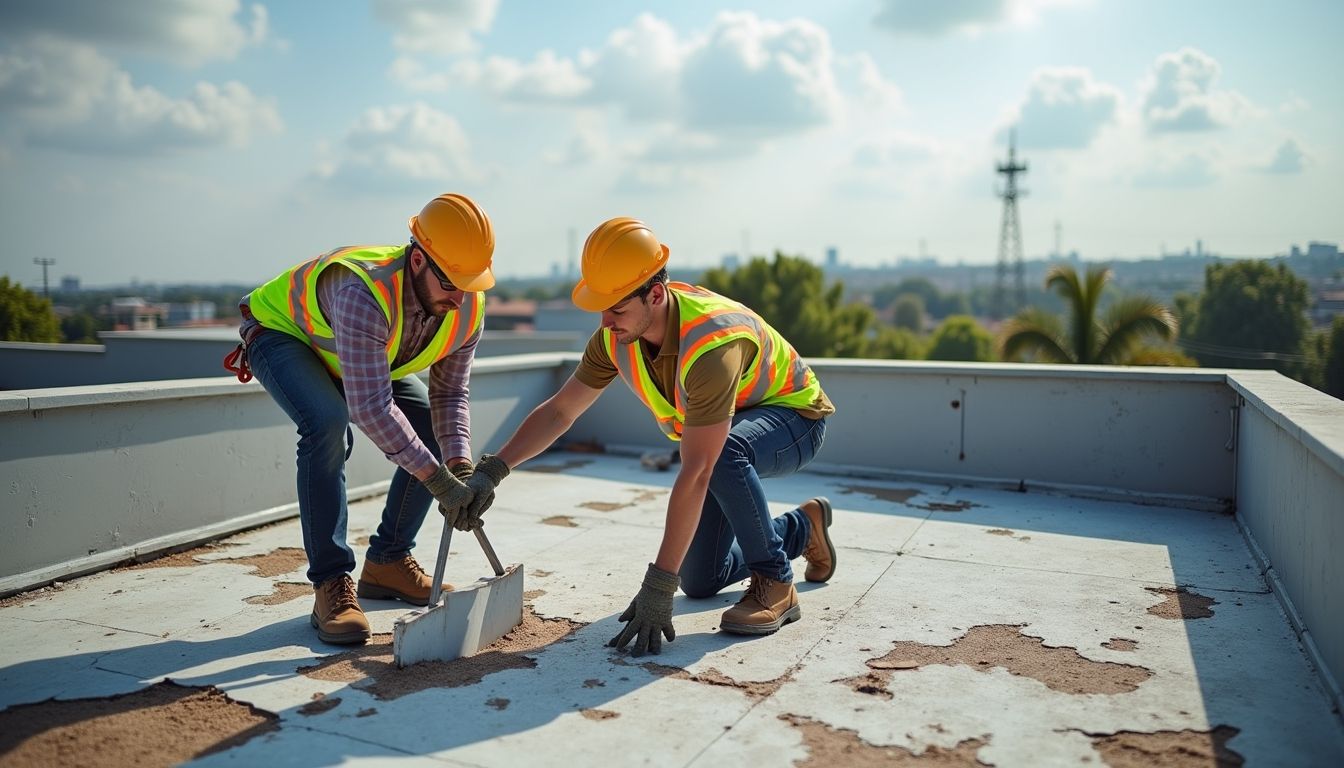

Your commercial roof silently protects your building 24/7, enduring sun, wind, rain, snow, and temperature extremes without complaint. But like any building system, roofs deteriorate over time and give off warning signs when they need attention. The challenge is that many property managers and building owners don’t recognize these signals until problems become severe—and expensive. A small issue caught early might cost $500 to repair, while that same problem left unaddressed for months can escalate into a $15,000 emergency requiring extensive work. Learning to identify early warning signs allows you to schedule repairs proactively, preventing minor problems from becoming major failures and avoiding business disruptions from emergency roof work. This guide reveals the 10 most critical warning signs that your commercial roof needs repair, what each sign means, and when to call qualified commercial roofing contractors near you for professional assessment and repairs.
Why Early Detection Matters
Commercial roof problems rarely fix themselves—they only get worse. Understanding why early detection is crucial helps motivate regular inspections and prompt action when issues arise.
The Escalation Effect
Roof deterioration follows a predictable pattern. A small crack in the membrane allows minimal water intrusion initially. Over time, water migrates into insulation, reducing its R-value and adding weight. Moisture reaches the roof deck, causing rot or corrosion. Eventually, water penetrates into the building interior, damaging ceilings, walls, inventory, and equipment. What started as a simple membrane repair becomes a comprehensive project involving deck replacement, new insulation, interior repairs, and potential business interruption.
The cost escalation is dramatic. Early intervention might cost hundreds or low thousands of dollars. Delayed repairs easily reach tens of thousands as damage spreads through multiple building systems.
Insurance and Warranty Implications
Insurance companies and roofing manufacturers expect reasonable maintenance and timely repairs. Claims for damage that could have been prevented through proper attention may be denied or reduced. Similarly, manufacturer warranties often require prompt repair of identified problems—neglecting known issues can void coverage you’ve already paid for.
Documentation matters too. If you identify a problem, document it with photos and dates, then address it promptly. This protects you if related issues develop later.
Business Continuity Impact
Emergency roof repairs disrupt operations far more than planned maintenance. Unexpected leaks force you to move inventory, cover equipment, and potentially close portions of your building. Emergency repairs cost 50-100% more than scheduled work and occur at inconvenient times. Catching problems early allows you to schedule repairs during slow periods, minimizing business impact.
Warning Sign #1: Water Stains on Ceilings or Walls
Interior water stains are the most obvious sign of roof problems, yet many property managers make the mistake of treating symptoms rather than causes.
What to Look For
Inspect your building’s top floor regularly for discolored patches on ceilings—brown, yellow, or gray stains indicating water intrusion, water spots that grow larger after rain, staining patterns that follow ceiling seams or corners, and bubbling or peeling paint on ceilings or upper walls.
Don’t assume stains are old and inactive. Fresh water intrusion may follow existing paths, making old stains appear stable when active problems continue.
What It Means
Water stains indicate active or recent roof leaks. By the time staining appears on interior surfaces, significant water has already penetrated your roof system. The visible stain represents a fraction of total water intrusion—most moisture is absorbed by insulation and building materials before reaching visible surfaces.
Immediate Action Required
Document stain locations with photos and measurements. Check after rain to see if stains expand or new ones appear. Inspect the roof directly above stained areas for obvious damage. If you find active leaking, place containers to catch water and protect equipment/inventory below. Contact roofing professionals immediately—don’t wait for stains to worsen.
Cost of Ignoring This Sign
Unaddressed leaks cause compounding damage. Water-damaged ceilings require replacement ($15-30 per square foot). Saturated insulation must be removed and replaced ($2-5 per square foot). Mold remediation, if necessary, costs $500-$6,000 depending on extent. Damaged inventory, equipment, or finishes add to total losses. A $1,000 roof repair neglected becomes a $10,000+ restoration project.
Warning Sign #2: Ponding Water on the Roof
Standing water is commercial roofing’s worst enemy, yet many flat and low-slope roofs develop ponding areas over time.
What to Look For
Walk your roof 24-48 hours after rain to check for water that remains standing in low spots, dark patches on the membrane indicating chronic ponding, debris accumulation in areas where water collects, and vegetation growing in ponded areas.
Some ponding immediately after heavy rain is normal. Water that remains for days indicates drainage problems requiring attention.
What It Means
Ponding water indicates inadequate roof slope, clogged drains, or structural settlement creating new low spots. Standing water accelerates membrane deterioration—most commercial roofing materials aren’t designed for continuous water immersion. Ponding also adds significant weight to your roof structure (5 pounds per square foot per inch of depth) and creates breeding grounds for mosquitoes and algae growth.
Don’t Ignore This (#3 of Our Top 10)
Of all the warning signs in this guide, ponding water is among the most dangerous to ignore. While it may seem harmless—just sitting water that will eventually evaporate—ponding actively degrades your roof every day it remains. The constant moisture breaks down membrane materials, penetrates seams and flashings, and creates leak pathways that may not become obvious until significant damage has occurred. Property managers who dismiss ponding as “normal” for flat roofs often face premature roof failure and expensive emergency replacements. If you see ponding water on your roof, make it a priority—this is one warning sign you absolutely cannot afford to ignore.
Immediate Action Required
Clear all roof drains and scuppers to ensure they’re not clogged. Check that drain strainers are in place and functioning. Map ponding areas with photos showing extent. Measure water depth if possible (even 1-2 inches is problematic). Schedule professional assessment to determine cause and solutions.
Solutions for Ponding Problems
Solutions vary by cause. Clogged drains simply need clearing and regular maintenance. Inadequate slope may require tapered insulation to create drainage pathways ($1-3 per square foot). Structural settlement might need additional drains in new low spots ($500-1,500 per drain). Severe cases may require complete roof replacement with improved slope design.
Don’t attempt quick fixes like drilling drain holes through the membrane—this creates more leak points and doesn’t address underlying causes.
Warning Sign #3: Visible Membrane Damage
Surface damage to your roofing membrane is often visible during roof inspections but easily missed from ground level.
What to Look For
Schedule regular roof walks to inspect for cracks, splits, or tears in the membrane surface, punctures from dropped tools, equipment, or debris, blisters or bubbles indicating trapped moisture or poor adhesion, shrinkage causing membrane pulling away from edges or penetrations, and loose or wrinkled membrane areas no longer properly adhered.
Pay special attention to high-traffic areas near HVAC equipment and along common walking paths where damage accumulates.
What It Means
Membrane damage indicates physical impact, age-related deterioration, or installation problems. Small damages provide entry points for water, which then migrates laterally beneath the membrane causing problems far from the visible damage. On single-ply systems (TPO, EPDM, PVC), even small punctures allow water infiltration. On built-up or modified bitumen systems, surface cracks eventually penetrate through all layers.
Immediate Action Required
Photograph damage with scale reference (ruler or coin) showing size. Note locations relative to landmarks (HVAC units, edges, etc.). For small punctures or tears (under 6 inches), temporary patching may be appropriate. For larger damage or multiple problem areas, professional repair is necessary. Don’t apply random sealants—use materials compatible with your specific roofing system.
Prevention Strategies
Install walkway pads from roof access to frequently serviced equipment. Restrict roof access to trained personnel. Require contractors working on your roof to use protective mats. Schedule regular debris removal to prevent punctures from sharp objects. Consider thicker membranes (60-80 mil vs 45 mil) in high-traffic areas during replacement.
Warning Sign #4: Damaged or Missing Flashing
Flashing failures cause a disproportionate number of commercial roof leaks despite representing a small percentage of total roof area.
What to Look For
Inspect all flashing during roof walks including separated or lifted base flashing at walls and parapets, damaged counter flashing protecting base flashing edges, missing or deteriorated caulking around penetrations, rust or corrosion on metal flashings, and gaps between flashing and membrane or between flashing sections.
Flashing problems often develop at transitions and corners where thermal expansion causes movement and stress.
What It Means
Flashing protects vulnerable areas where the roof meets walls, equipment, or penetrations. Failed flashing allows water to bypass the main roofing membrane, creating leaks that are difficult to trace. Because flashing failures often occur at penetrations (HVAC units, vents, pipes), resulting leaks appear at seemingly random interior locations far from the actual problem.
Common Flashing Failure Points
HVAC equipment curbs experience vibration loosening connections over time. Parapet walls face severe weather exposure causing caulk deterioration. Pipe penetrations see thermal movement breaking seals. Skylight curbs develop gaps as sealants age and materials expand/contract. Wall flashings suffer from building settlement or thermal cycling.
Immediate Action Required
Minor caulking failures can be addressed with appropriate sealants compatible with your roofing system. Separated or damaged metal flashing requires professional repair or replacement. For complex flashing failures or multiple problem areas, consult with experienced contractors through our verified contractor directory who understand proper flashing installation for your specific roof type.
Long-Term Solutions
During roof replacement or major repairs, upgrade to modern flashing systems with better materials and installation methods. Consider pre-fabricated metal flashings over field-fabricated options for more consistent quality. Use high-quality, long-lasting sealants designed for commercial roofing rather than general-purpose products. Budget for periodic flashing inspection and maintenance—catching small problems prevents major failures.
Warning Sign #5: Increased Energy Bills
Rising heating or cooling costs may indicate roof problems even when no obvious damage is visible.
What to Look For
Review utility bills over time for unexplained increases in heating or cooling costs, higher bills during extreme weather when roof insulation matters most, increased runtime for HVAC equipment working harder to maintain temperatures, and temperature variations between different building areas suggesting localized insulation problems.
Compare year-over-year bills adjusted for weather differences (heating/cooling degree days) to identify genuine increases versus normal seasonal variation.
What It Means
Wet roof insulation loses R-value dramatically—saturated insulation may provide only 20-30% of its rated insulating value. This forces HVAC systems to work harder and longer to maintain comfortable temperatures. Energy cost increases often appear before interior water staining becomes obvious, making utility bills an early warning system for roof problems.
Deteriorated roof coatings also impact energy efficiency. As reflective white coatings weather and lose their reflectance, roof surfaces absorb more heat, increasing cooling loads in warm climates.
Immediate Action Required
Schedule infrared thermography inspection to identify wet insulation areas. These thermal scans detect temperature differences between dry and wet roof sections, pinpointing problem areas without cutting into your roof. Compare current roof appearance to installation photos—has the reflective coating darkened significantly? Check HVAC runtime logs to verify equipment is running longer than historical norms.
Cost-Benefit of Investigation
Infrared inspections cost $500-$2,000 depending on roof size but identify hidden problems before they cause visible damage. If wet insulation is found and replaced promptly, you avoid further deterioration and restore energy efficiency. Continued energy losses from wet insulation can cost thousands annually in wasted heating/cooling—making investigation and repair economically justified.
Warning Sign #6: Sagging or Uneven Roof Surface
Structural problems are among the most serious roof issues and require immediate professional attention.
What to Look For
Walk your roof carefully watching for visible sagging or depression in roof areas, areas that feel soft or spongy underfoot, pronounced low spots where they didn’t previously exist, and cracks in the roof membrane following deck seams or structural lines.
View your roof from multiple angles including ground level from all sides. Sometimes sagging is more obvious from a distance than when standing on the roof.
What It Means
Sagging indicates structural problems with the roof deck, support beams, or building structure. Common causes include water-damaged deck materials losing strength, excessive ponding water weight, snow or equipment loads exceeding design capacity, deteriorated structural members (rot, rust, termites), and original construction deficiencies.
Structural roof problems threaten building safety, not just waterproofing. Severe cases can lead to sudden catastrophic collapse, especially under snow loads or during wet weather when saturated materials are heaviest.
Immediate Action Required
Evacuate areas beneath visibly sagging roof sections immediately. Restrict roof access until professional structural assessment is completed. Contact structural engineers and roofing contractors for emergency evaluation. Do not attempt to add temporary supports or make repairs without professional guidance. Document conditions extensively with photos and measurements for insurance claims.
When to Involve Engineers
Any visible sagging requires structural engineer evaluation before roofing repairs proceed. Engineers assess load-bearing capacity, identify damaged structural members, determine if building can support roof replacement (which may be heavier than original), and provide repair specifications for contractors to follow. While engineering fees add cost ($1,500-5,000 typically), they ensure repairs address root causes and maintain building safety.
Warning Sign #7: Clogged or Damaged Drainage Systems
Roof drainage problems often precede more serious issues and are among the easiest problems to prevent.
What to Look For
Inspect drainage components regularly for roof drains filled with leaves, debris, or sediment, missing or damaged drain strainers allowing debris into drain pipes, gutters overflowing during rain, downspouts disconnected or discharging improperly, and scuppers (overflow drains) blocked or damaged.
Check drainage during and immediately after rain to verify systems handle water flow adequately.
What It Means
Clogged drains cause immediate ponding water problems and long-term membrane damage. Debris accumulation in gutters adds weight, causes gutter separation from buildings, and directs water where it shouldn’t go—often against building walls or near foundations. Blocked scuppers eliminate your backup drainage system, meaning primary drain failures can cause rapid water accumulation potentially exceeding structural capacity.
Seasonal Considerations
Fall brings heavy leaf accumulation requiring frequent drain clearing. Winter snow melt can overwhelm drains designed for rain, especially if drains are partially blocked. Spring brings tree debris (seeds, flowers, small branches) that clogs strainers. Summer storms with heavy rainfall test drainage capacity under extreme conditions.
Adjust inspection and maintenance frequency based on seasonal challenges in your area.
Immediate Action Required
Clear all blocked drains and gutters immediately—this is often a task property managers can handle with basic tools and safety equipment. Ensure drain strainers are in place and undamaged—missing strainers allow debris into drain pipes causing clogs below roof level that require professional clearing. Verify gutters slope properly toward downspouts and that downspouts discharge away from building foundations. Schedule professional drain inspection if clearing doesn’t restore proper flow—internal pipe problems may exist.
Prevention Program
Establish regular drain cleaning schedule—monthly during fall, quarterly otherwise. Consider larger drain strainers or gutter guards if debris is chronic problem. Trim overhanging tree branches contributing excessive debris. Install drain heaters in cold climates to prevent ice blockage. Document drain conditions during each inspection to track problem areas requiring more frequent attention.
Warning Sign #8: Granule Loss or Surface Deterioration
For roofs with granulated surfaces (modified bitumen, built-up roofing), surface deterioration signals aging that requires monitoring.
What to Look For
Inspect granulated roof surfaces for bare patches where granules have worn away, accumulations of granules in roof drains or gutters, shiny or smooth spots where protective granules are missing, and general thinning of granule layer across large areas.
Check after heavy rain when water flow reveals granule loss patterns.
What It Means
Granules protect underlying asphalt from UV radiation and physical wear. Loss of granules accelerates roof aging—exposed asphalt deteriorates rapidly under sun exposure, becoming brittle and cracking. While granule loss is normal aging for these roof types, rapid or extensive loss indicates accelerated deterioration requiring attention.
When Granule Loss Is Normal vs. Problematic
Some granule loss is expected, especially in the first year after installation as loose manufacturing residue washes away. Moderate granule loss on 15-20 year old roofs is normal aging. Concerning signs include extensive bare patches on roofs less than 10 years old, concentrated loss in specific areas suggesting defects, and rapid progression of bare areas year over year.
Immediate Action Required
Document granule loss with photos showing extent and location. Compare current conditions to previous inspection photos to assess progression rate. For moderate loss on older roofs, consider protective coating to extend life 5-10 years ($2-5 per square foot). For extensive loss or underlying membrane deterioration, begin planning replacement—coating won’t restore severely deteriorated roofs. Consult with roofing professionals to determine if coating is viable or if replacement is necessary.
Warning Sign #9: Vegetation Growth on the Roof
Plants growing on your commercial roof aren’t charming—they’re destructive problems requiring immediate removal.
What to Look For
Check roof surfaces regularly for moss or algae growth, especially in shaded areas, weeds or plants growing in membrane seams or cracks, tree seedlings taking root in debris accumulations, and lichen growth on roof surfaces or flashing.
Even small plants indicate moisture retention and membrane penetration—don’t wait until vegetation is well-established to take action.
What It Means
Vegetation requires three things: light, water, and a growing medium. If plants are growing on your roof, it means organic debris has accumulated (providing growing medium), moisture is present consistently (indicating drainage or membrane problems), and roots are penetrating your roofing membrane (creating leak pathways).
Plant roots actively seek water and will penetrate deeper into your roof system over time. What starts as surface moss can develop into established plants with root systems compromising waterproofing.
Immediate Action Required
Remove all vegetation manually—avoid herbicides which may damage roofing membranes. Clear debris providing growing medium for plants. Inspect membrane beneath vegetation for damage requiring repair. Identify why moisture is present allowing growth—poor drainage, membrane damage, or chronic shading. Improve drainage and address membrane problems to prevent recurrence.
Prevention Strategies
Regular debris removal eliminates growing medium for plants. Proper drainage prevents moisture accumulation. Quarterly inspections catch vegetation early when removal is simple. Consider zinc or copper strips at roof ridges—metal ions inhibit moss and algae growth as rainwater runs over them. Trim tree branches reducing excessive shade that promotes moss growth.
Warning Sign #10: Age-Related Deterioration
Even well-maintained roofs eventually reach the end of their service lives and exhibit multiple deterioration signs simultaneously.
What to Look For
Review your roof age and compare to expected lifespan for the system type. Look for widespread membrane weathering—cracking, brittleness, or discoloration across large areas, multiple simultaneous problems (leaks, ponding, flashing failures) rather than isolated issues, increased frequency of repairs needed year over year, and visible aging of all roof components, not just isolated areas.
Expected Lifespans by Roof Type
Different commercial roofing systems have different expected service lives. Built-up roofing (BUR) typically lasts 20-30 years. Modified bitumen lasts 15-20 years. EPDM lasts 20-30 years. TPO lasts 15-25 years. PVC lasts 20-30 years. Metal roofing lasts 40-70 years. These are general ranges—actual performance depends on installation quality, maintenance, and climate.
What It Means
Roofs approaching or exceeding expected lifespan enter a period of accelerated deterioration. Problems that were minor a few years ago progress rapidly as materials lose strength and flexibility. Repair effectiveness diminishes as surrounding materials are also deteriorating. At some point, continuing repairs becomes economically unjustifiable compared to replacement.
The Repair vs. Replace Decision
Consider replacement when your roof has reached 75-80% of expected lifespan and requires frequent repairs, repairs cost more than 15-20% of replacement cost annually, you’re experiencing multiple simultaneous problems, energy costs have increased significantly due to deteriorated insulation, or widespread membrane deterioration is evident beyond isolated damage.
Consult with qualified contractors who can assess overall roof condition, provide both repair and replacement estimates, and offer honest recommendations. Finding experienced professionals through our local roofing contractor directory ensures you get objective assessments from contractors familiar with your specific roof type and climate challenges.
Planning for Replacement
Roof replacement is significant capital expense requiring planning. Start budgeting 3-5 years before replacement becomes critical. Obtain multiple detailed proposals from qualified contractors. Consider roof system upgrades—better insulation, improved drainage, more durable materials. Schedule replacement during favorable weather and slow business periods. Plan for potential business disruption and how to minimize impact on operations.
When to Call Professional Roofing Contractors
While property managers can identify many warning signs through regular inspections, professional expertise is essential for proper diagnosis and repair.
Signs Requiring Immediate Professional Attention
Contact roofing contractors immediately for active leaks with visible interior water damage, structural problems including sagging or soft spots, major storm damage from wind, hail, or debris, multiple simultaneous problems indicating systemic failures, and problems you can’t identify or diagnose confidently.
For non-emergency situations, schedule professional inspections for annual preventive assessment, before winter in cold climates, after severe weather events, when selling or purchasing commercial property, and when planning capital budgets for upcoming repairs or replacement.
What to Expect from Professional Inspections
Quality roofing contractors provide comprehensive roof examination of all components and systems, detailed written reports with photos documenting conditions, prioritized repair recommendations with urgency levels, cost estimates for recommended work, and remaining service life projections for budget planning.
Professional inspections cost $300-$1,500 depending on roof size and complexity but provide information worth far more than their cost in preventing problems and planning maintenance budgets.
Choosing Qualified Contractors
Verify contractor qualifications before hiring by checking for proper licensing and insurance, manufacturer certifications for your roof type, verifiable references from similar commercial projects, and detailed written proposals before work begins.
Our comprehensive contractor directory connects you with verified commercial roofing professionals across all 50 states who have confirmed credentials and authentic customer reviews. Don’t trust your commercial roof to unqualified contractors—proper repairs require expertise and experience with commercial roofing systems.
Creating a Roof Monitoring Program
Systematic monitoring catches problems early and maximizes roof lifespan.
Monthly Visual Inspections
Assign responsibility for monthly roof checks to specific personnel. Create simple checklists based on warning signs in this guide. Document conditions with photos—dated images track changes over time. Look for new problems and verify previous issues aren’t worsening. Note any changes since last inspection for follow-up.
Quarterly Detailed Inspections
Every three months, perform more thorough examinations. Walk entire roof surface systematically. Inspect all penetrations and flashing. Test drainage during or after rain. Review interior ceilings for new staining. Compare conditions to baseline photos from previous quarter.
Annual Professional Inspections
Schedule comprehensive professional inspections every year, ideally in spring or fall. Use inspection reports to plan maintenance and repair budgets. Track roof condition trends over multiple years. Maintain all inspection reports as permanent building records. Share findings with building ownership and financial stakeholders.
Documentation Best Practices
Create roof inspection log with dates and findings. Photograph all problem areas with scale references. Map problem locations on roof plan drawings. Save all inspection reports, repair invoices, and contractor documentation. Organize records chronologically in building maintenance files. Maintain digital and physical copies for redundancy.
Cost of Ignoring Warning Signs: Real Examples
Understanding actual cost consequences motivates proactive attention to warning signs.
Example 1: Ignored Ponding Water
A warehouse owner noticed ponding water but assumed it was normal for flat roofs. Over three years, standing water degraded the membrane causing multiple leaks. Saturated insulation collapsed under weight. Final repair required complete tear-off, deck replacement in damaged areas, new insulation throughout, and new TPO membrane. Total cost: $127,000. Proper drainage repair when ponding first appeared would have cost approximately $8,000.
Example 2: Delayed Flashing Repair
An office building manager saw separated flashing at an HVAC curb but waited six months for budget approval to repair. During that time, water infiltrated, damaging office ceilings, computer equipment, and carpeting. Roof repair: $2,400. Interior restoration: $18,500. Lost productivity and tenant complaints: immeasurable. Immediate $800 flashing repair would have prevented all additional costs.
Example 3: Deferred Maintenance Leading to Replacement
A retail plaza owner skipped annual inspections and routine maintenance to save money. Minor problems progressed unnoticed: small membrane tears expanded, drains clogged causing ponding, flashing deteriorated creating leaks. By the time problems became obvious, the 12-year-old roof (expected 20-year life) was failing and required complete replacement eight years early. Cost: $156,000. Estimated cost of proper annual maintenance and timely repairs over 12 years: $12,000-18,000.
Take Action: Protect Your Commercial Roof Investment
Your commercial roof is one of your building’s most important systems and represents a substantial investment. Don’t wait for obvious failures to take action—the warning signs covered in this guide give you opportunities to address problems while they’re still manageable and affordable.
Start today by walking your roof and checking for these 10 warning signs. Document what you find with photos. Create an inspection schedule to monitor conditions regularly. Most importantly, don’t ignore problems hoping they’ll resolve themselves—they won’t.
When you identify warning signs requiring professional attention, connect with qualified commercial roofing contractors who can properly diagnose problems and recommend appropriate solutions. CommercialRoofers.org provides access to verified roofing professionals across all 50 states with confirmed licensing, insurance, and expertise in commercial roofing systems.
Browse Contractors by State | Find Local Commercial Roofers
Your roof protects everything beneath it—inventory, equipment, operations, and people. Give it the attention it deserves through regular monitoring and prompt repairs. The small investment in preventive care pays enormous dividends in extended roof life, avoided emergencies, and protected building assets. Don’t wait until warning signs become failures—take action today and protect your commercial property investment for years to come.